
This year we are growing Black Beauty variety. Planted in Feb majority germinated and all was going well until moved to the greenhouse and quite a few were savaged by slugs or snails.
Aubergine
Aubergines, also known as eggplants and brinjal, are tender plants that need lots of warmth to crop successfully, so they’re best grown in a greenhouse, but can fruit outdoors in very mild locations or in long, hot summers. There is an increasing range of varieties available to grow, producing fruits of various colours, shapes and sizes, including newer, smaller-fruited options that cope better with the UK climate. Along with tomatoes, potatoes and bell peppers, aubergines belong to the nightshade plant family. Often considered a vegetable, aubergines are technically a fruit as they grow from a flowering plant and contain seeds. Aubergines (Solanummelongena)
Nutritional Values
Aubergines, also known as eggplants, are low in calories and provide various nutrients. Here’s a breakdown of their nutritional content per 100 grams: Aubergines are rich in antioxidants, particularly nasunin, which helps protect brain cell membranes and may support overall brain health. The high fibre content in aubergines can help manage blood sugar levels, making them beneficial for individuals with type 2 diabetes. Aubergines may help lower LDL cholesterol levels and support heart health due to their fibre and antioxidant content. Being low in calories and high in fibre, aubergines can be a great addition to a weight management diet, helping to keep you full without adding many calories. Aubergines can be prepared in various ways, including baking, grilling, and sautéing, making them a versatile ingredient in many dishes. Incorporating aubergines into your diet can provide these health benefits while adding flavour and texture to your meals. The Powerful Antioxidant in Eggplant and Its Health Benefits on the Brain This particular antioxidant may help reduce the risk of cognitive decline by protecting brain cell membranes from damage from free radicals. It can also help with removing waste products from cells and allowing nutrients in through neuronal communication, and increasing blood flow to the brain. This, in total, can help protect the brain from cognitive decline and help reduce the chance of memory loss and other learning problems during older age.
Nutritional Profile of Aubergines
Nutrient
Amount per 100g
Calories
20-25 kcal
Protein
0.9-1 g
Fat
0.2-0.4 g
Carbohydrates
2.2-6 g
Fibre
2.0-3 g
Potassium
168 mg
Health Benefits
Antioxidants
Blood Sugar Control
Heart Health
Weight Management
Versatility in Cooking
Nasunin
Nasunin, found in the peels of eggplants, is a powerhouse antioxidant that is considered an anthocyanin known for its ability to help protect cells by scavenging for free radicals and chelating iron. It also has antiangiogenic properties, meaning it can prevent the growth of blood vessels in harmful cells. In general, anthocyanins are characterized by their color of red, purple, and blue in various kinds of produce.
Growing
Sowing Sow aubergine seeds indoors, usually from February onwards, as they need warmth and a long growing season. If the plants will be growing in a heated greenhouse or warm conservatory, you can start them earlier, in January. If they’ll be growing outdoors, delay sowing indoors until early March, as these tender plants mustn’t be moved outside until after the last frost. Aubergine seeds need at least 21°C (70°F) to germinate, either in a heated propagator or in a warm location indoors. You can even germinate seeds in an airing cupboard, but check daily and move seedlings to a warm, bright windowsill as soon as they appear. Keep young plants in good light at 16–18°C (60–64°F) and water regularly, as needed. Once they have their first set of true leaves, prick out your seedlings, moving them into their own 7.5cm (3in) pot or into individual modules in a tray. Planting Plant young aubergine plants, either grown from seed or newly bought, into their final growing position at the following times: To plant in containers To plant into the ground Plant Care Watering Aubergine plants need a steady supply of moisture to grow and crop well. Plants in containers are particularly susceptible to drying out and may need watering daily in hot weather. An automated drip irrigation system can be useful to ensure consistent watering. Mulching After planting, apply a thick layer of mulch, such as garden compost or well-rotted manure, around aubergine plants growing in the ground or a greenhouse border. This helps to hold moisture in the soil and deter weeds. Feeding Plants growing in the ground in enriched soil may not need regular feeding, though it can help to increase yield. Pinching out shoot tips Supporting plants
Make sure to harden off seedlings before planting them outdoors or into an unheated greenhouse, to avoid a check in growth. Plant them at the same depth they were growing in their pot, and insert canes for support. If planting outdoors, choose a really warm, sunny, sheltered spot, such as by a sunny wall or south-facing patio, and cover plants with cloches or plastic-free fleece for a couple of weeks to get them off to a good start.
Choose a pot at least 30cm (1ft) in diameter and fill with peat-free multi-purpose compost, then plant one young aubergine in the centre. Or plant two in a standard growing bag.
Start warming the soil with cloches two weeks before transplanting and enrich the soil with plenty of garden compost or well-rotted manure. Alternatively, if you're practising no-dig, mulch the soil and plant directly into the mulch. Space plants 60cm (2ft) apart.
Aubergine plants need some regular attention to produce a successful crop. Some plants develop small spines on the stems, so take care when tending them.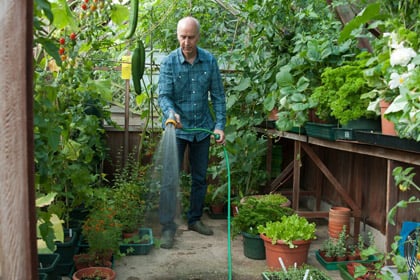
In addition, mist the leaves regularly (ideally twice daily) with tepid water to discourage red spider mites and improve fruiting. Or, on hot days, damp down the greenhouse in the morning so the water evaporates during the day, raising the humidity
Feed aubergines in containers every two weeks with an organic high-potassium liquid fertiliser once the first flowers appear. This helps to encourage further flowering and good fruiting.
When aubergine plants are around 30cm (1ft) tall, pinch out the tip of the main stem to encourage side-shoots. This creates bushier plants that should produce more fruits.
Aubergines can form large, top-heavy plants, so insert a sturdy bamboo cane once they are in their final container and tie in the main stem as it grows. You may need to add more canes to support the side-shoots once fruits start to form, particularly if you have a heavy crop or a large-fruited variety.
Harvest
Cooking
Calendar
| Jan | Feb | Mar | Apr | May | Jun | Jul | Aug | Sep | Oct | Nov | Dec | |
|---|---|---|---|---|---|---|---|---|---|---|---|---|
| Sow | yes | yes | yes | |||||||||
| Plant | yes | yes | yes | |||||||||
| Harvest | yes | yes | yes | yes | yes |
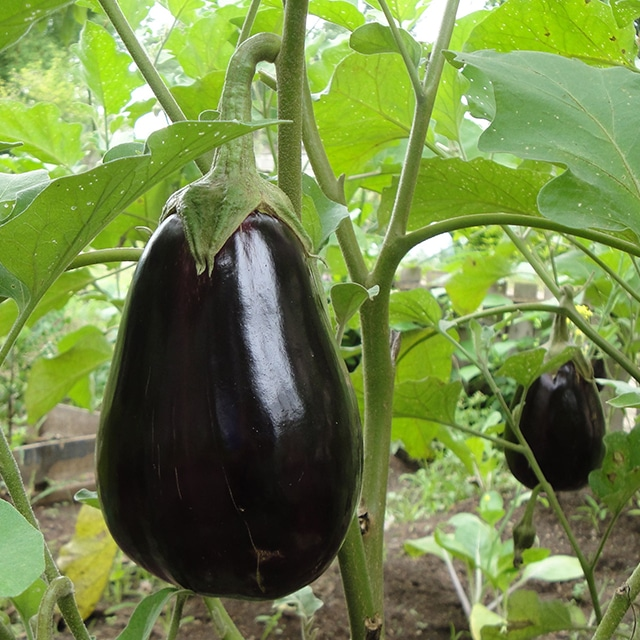
Our success rate in growing aubergines is pretty much zero. They have managed to grow to around 9 inches high flower then die of the cold weather around Oct/ Nov.
This year we have managed to obtain some from a nursery in St Peters Green. Despatched by AcDc logistics as young plants they are now happily growing in the greenhouse. A foot tall, as I write, they are flowering and waiting for pollination.
The Deeks variety, as we know them are looking impressive.