
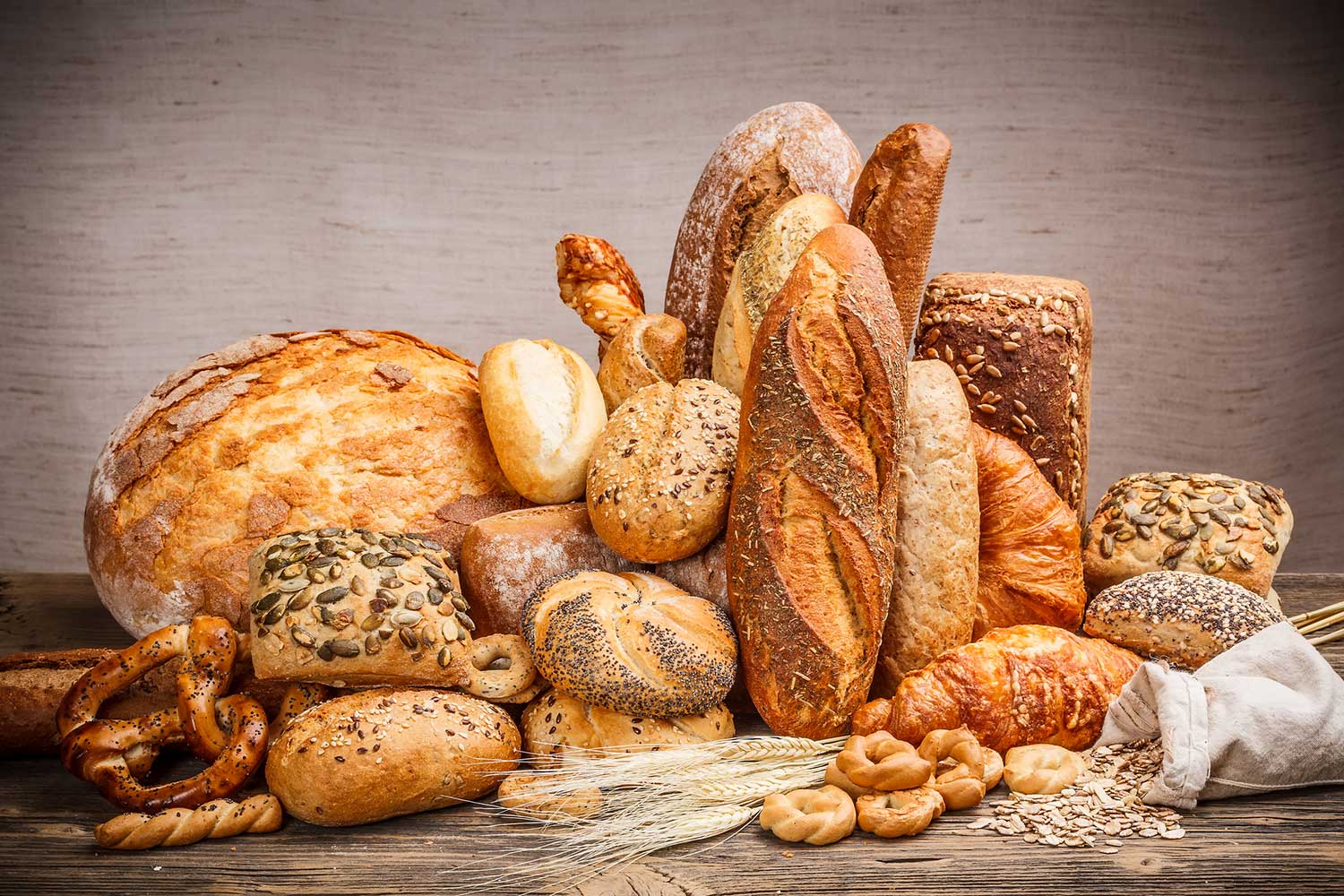
Your new go-to bread recipe. Easy Bread is simple to make and provides the perfect base for many bread types.
Large Bowl
Digital Scales
Wooden Spoon
Measuring Jug
Measuring Spoons
Baking Sheet
Wire Rack
- 500 g Strong White Flour
- 7 g Fast-action Yeast (one sachet)
- 12g Salt
- 3 tbsp Butter/Margarine/Oil (whichever you prefer) [butter= 43g] [Margarine =47g] [Olive oil= 41g]
- 300 ml Warm Water
Strong Bread Flour
For the most predictable bread dough, Strong Bread Flour is the best. This is due to the amount of protein (ie, gluten) in the flour, which gives the bread a good structure and chew factor.
You can, of course, use Wholemeal Flour, should you prefer.
Fast Action Yeast
There was a time when you could buy various types of yeast, but nowadays, Fast Action Yeast in 7g sachets is the most accessible. It also works brilliantly in many recipes, but especially this Easy Bread, as no extra measuring or preparation is required to activate it.
Salt
When it comes to baking bread, you don’t want your yeast getting ahead of itself. That’s where salt comes in! Salt retards the yeast and slows it down, giving the gluten in your flour time to strengthen and develop. It also adds to the flavour.
Butter, Margarine or Oil
Although this is actually an optional extra in your bread (so don’t worry if you don’t have any) it adds a little something more. I personally use margarine because we always have it to hand, and it suits the vegans amongst us. But you could even experiment with different oils for a subtle change in taste.
Warm Water
Cool water will also work, but you’ll be left waiting a while for your dough to come to life. Warm water is preferable, but just don’t let it be too hot either.
In a large bowl, add the flour, yeast and salt and mix to combine.
Make a well in the middle of the mixture and add the butter/margarine/oil and warm water. Mix to combine, adding a little more water if required, and using your hands to bring together into a soft, lumpy, slightly sticky dough.
Turn the dough out onto a floured surface and knead for 10 minutes until the dough is smooth and elastic.
Place the dough in an oiled bowl and cover with a piece of oil cling film, or a damp tea towel. Allow the dough to rise for at least 1 hour, or until it has doubled in size.
Line a baking sheet with some greaseproof paper and set aside. Knock back the dough (by gently punching the air from the dough and pulling it back on itself) before forming into your desired loaf shape.
Place the loaf onto your prepared baking sheet (covering again with the oiled cling film or damp tea towel) and leave to prove for a further 1 hour, or until the dough has doubled in size.
Pre-heat your oven to 220°c (200°c for fan assisted ovens or Gas Mark 7).
Before baking, with a sharp knife add a few scores to the top of your bread. Bake for 25-30 minutes until golden brown and the bread sounds hollow with tapped underneath.
Leave to cool on a wire rack or enjoy warm, sliced with lots of butter.
Comments